Make the first tree interesting
A park visit does not need a summit or a long distance to feel worthwhile. Before moving on from the first suitable stopping place, look at one tree from the ground upward: where the trunk divides, how the canopy spreads, and whether the leaves make a dense screen or let light through. Then compare it with another tree from the permitted path. You have already changed the outing from passing scenery to noticing differences. This is a suggested observation game, not an official guided programme or a test of botanical knowledge.
Why SIREH is more than an exercise stop
SIREH Park sits on Jalan Nusa Idaman in Iskandar Puteri. Its operator describes a 343-acre landscape with botanical areas, lakes and uneven terrain, supported by a conservation and education mission. That background gives a slower visit a purpose: the trees are part of a living collection, not merely shade on the way to a photograph. The park's name draws inspiration from the sirih plant and its association with respect and harmony. Treat the grounds with that same care, whether your visit is brief or part of a longer outdoor day.
Let GeoTree answer one real question
The park introduces GeoTree as an interactive record of registered trees, with information such as species, location and planter, and on-site QR links. Use the official park page to reach the tool. If a relevant marker is present and accessible, compare its information with the tree in front of you. Pick one question: what is its recorded name, or what can we learn about how it became part of the collection? Do not assume every tree has a readable marker or that connectivity will work everywhere. If the record cannot be opened, keep the observation as an unanswered question rather than inventing an identification.
Bring home a note, not a leaf
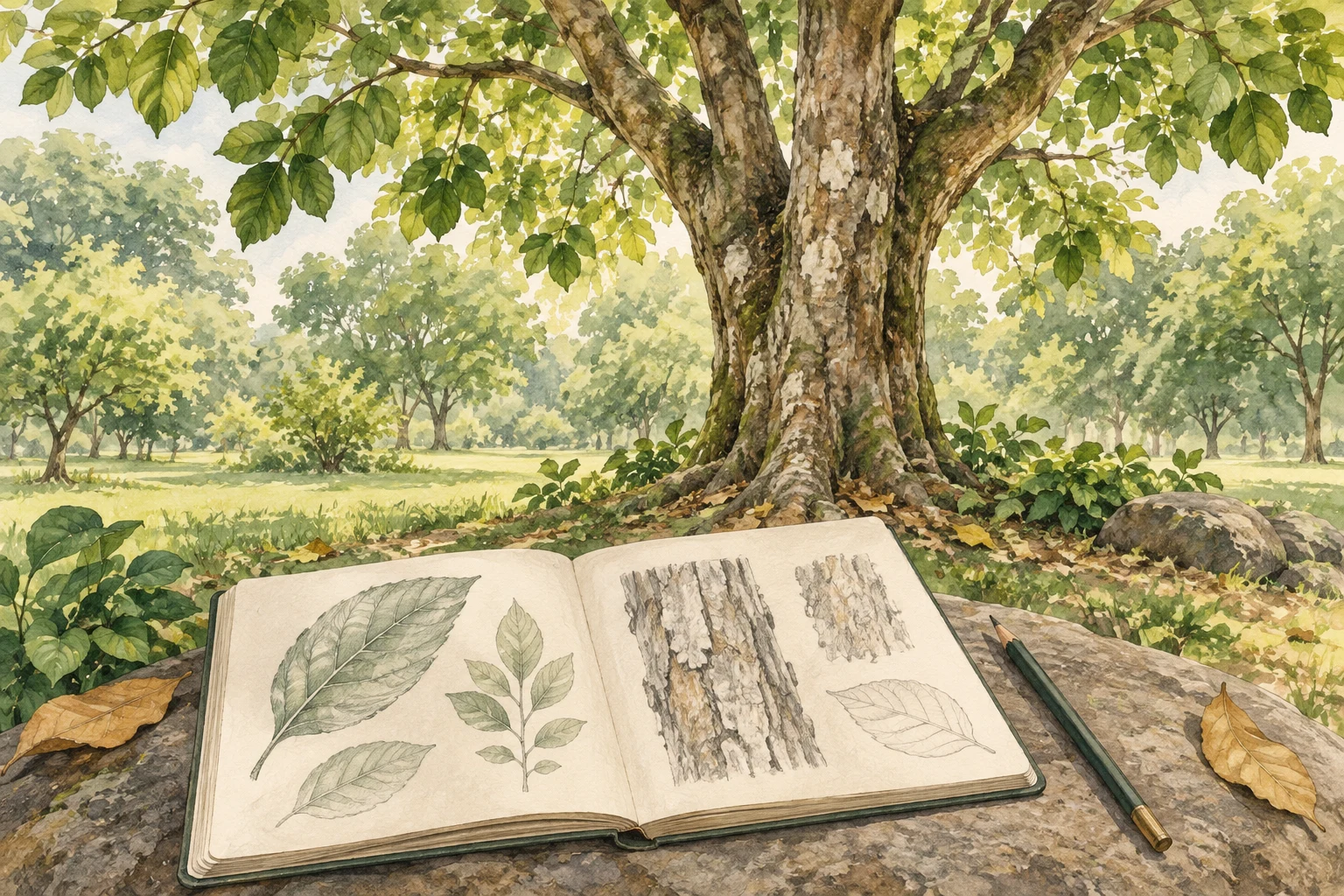
A phone photograph or a small sketch can preserve what caught your attention. Draw the outline of a leaf you can see without handling it, or describe bark as smooth, ridged or patterned. Those are observations, not proof of a species or its medicinal uses. Keep branches, leaves and bark where they are; do not scratch a trunk or pull something closer for a better picture. Children can choose the feature they noticed first while an adult helps read the official information. Nobody needs to give the correct scientific answer for the walk to be enjoyable.
A short visit is not the whole trail network
The park lists five trails with a combined reach of up to 10 kilometres. That is not a claim that one easy, flat 10-kilometre loop suits everyone. Ask about a currently open stretch that fits your group's walking ability, weather and available time. Stay on designated routes, avoid blocking shared paths, and do not approach the water's edge for a photograph. If conditions change or the group becomes uncomfortable, shorten the visit. Other advertised activities have their own arrangements; seeing them on a park website does not make them included in a walk or a transport booking.
A useful ending: what did you notice differently?
At the end, compare just two observations: perhaps one canopy looked open while another was dense, or the bark patterns were unexpectedly different. Add one fact that the official record actually confirmed. This makes a small outing memorable without turning it into homework. A meal or a rest can follow if it suits the day; there is no need to turn a gentle tree-discovery visit into a packed activity circuit. Check the park's current notices and visitor arrangements before travelling. The illustration above represents the idea of observing trees, not the actual park layout or a promised scene.
Questions before setting off
Do we need to complete all the trails? No; choose an appropriate permitted route rather than a distance target. Does a tree's app entry make it safe to taste or use? No—do not eat or collect plants on that basis. Is the entire park step-free? The operator describes uneven terrain, so ask about your exact route and mobility needs. Can we combine it with a Singapore transfer? Enquire with the actual park drop-off, date and return meeting point; activity arrangements remain separate.
Keep the transport plan as clear as the outing
Send the Singapore pickup, exact Iskandar Puteri drop-off and map pin, travel dates, passengers, luggage and any child or mobility needs. Include requested stops, waiting and a return if needed. The vehicle, final fare and included transport scope are confirmed through WhatsApp; this article does not promise a vehicle category or park admission. Border queues, traffic and weather affect timing. Agree a practical public meeting point rather than assuming a driver can enter a walking trail to collect you.